Epitalon: 7 Facts About Aging Research, Benefits, and Safety
Epitalon is a synthetic peptide investigated for its potential effects on biological processes associated with aging. It is often discussed in connection with telomeres, cellular aging, sleep regulation, and the hormone melatonin. Despite these areas of scientific interest, evidence supporting its use as an anti-aging treatment in humans remains limited.
This is sometimes confused with it, a preparation associated with research on the pineal gland. Although the names are related, they should not be treated as interchangeable. Understanding what this is, what researchers have investigated, and what remains unknown is important when evaluating products marketed for longevity or wellness.
1. What Is Epitalon?
It is a synthetic tetrapeptide, meaning it consists of four amino acids. It is commonly described in scientific and commercial discussions as a peptide related to research involving the pineal gland, a small endocrine gland in the brain that helps regulate circadian rhythms through the hormone melatonin.
Interest in Epitalon comes largely from research exploring cellular aging and the biological processes that change over time. However, a compound’s proposed biological activity does not establish that it can slow aging, extend human lifespan, or prevent age-related diseases.
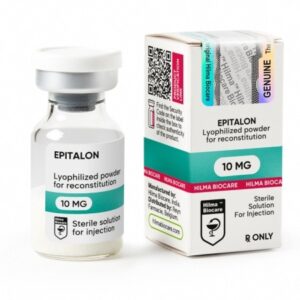
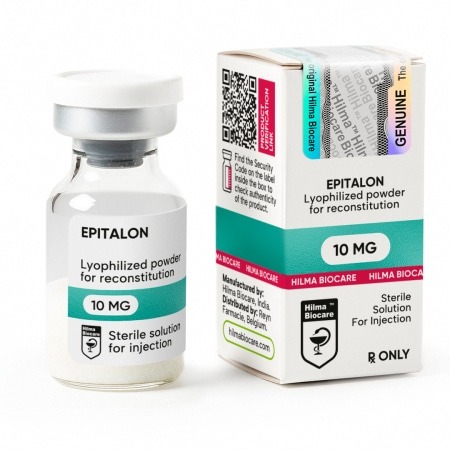
Products sold online under the Epitalon name may vary in quality, purity, formulation, and regulatory status. A product label or seller description alone cannot confirm that a preparation is suitable or safe for human use.
2. How Does Epitalon Work?
Researchers have investigated it in relation to cellular signaling, telomerase activity, and processes associated with the pineal gland. Telomerase is an enzyme that can maintain telomeres, the protective structures at the ends of chromosomes.
Telomeres typically shorten as many cells divide, although the process varies by cell type and biological circumstances. Because telomere biology is associated with cellular aging, it has become an important subject in longevity research.
Some studies have reported effects of it in experimental settings, but the precise mechanisms and clinical relevance remain uncertain. Findings in laboratory cells or animals do not establish that the peptide produces meaningful or safe anti-aging effects in humans.
It is therefore inaccurate to describe Epitalon as a proven method of reversing aging or reliably lengthening telomeres throughout the human body.
3. Epitalon and Longevity Research
One of the main reasons Epitalon attracts attention is its proposed relationship with longevity. Researchers have explored whether the peptide influences biological pathways associated with aging, cellular maintenance, and age-related changes.
However, longevity is complex. It depends on genetics, environment, lifestyle, disease prevention, and numerous biological systems. A change in a laboratory marker does not necessarily translate into a longer or healthier life.
The available evidence does not establish Epitalon as a proven human longevity treatment. Robust, independently replicated clinical trials would be needed to determine whether it improves meaningful health outcomes, which groups might benefit, and what risks may arise over time.
Claims that Epitalon reverses biological age, guarantees a longer lifespan, or prevents age-related disease should therefore be treated cautiously.
4. What Is the Connection Between Epitalon and Telomeres?
Telomeres help protect chromosome ends during cell division. Their length and maintenance are studied as part of research into cellular aging, but telomere length alone is not a complete measure of biological age or overall health.
Some experimental studies involving Epitalon have examined telomerase activity and telomere-related processes. These findings have contributed to interest in the peptide among people researching longevity.
Nevertheless, there is insufficient clinical evidence to conclude that taking Epitalon safely improves human health by changing telomere length. Telomerase regulation is also biologically complex: increased telomerase activity is not automatically beneficial in every tissue, because telomerase is involved in processes relevant to both normal cell maintenance and cancer biology.
For these reasons, telomere-related claims should be interpreted within the limits of the actual study design and findings, rather than as proof of a clinically meaningful anti-aging effect.
5. Epitalon, Melatonin, and Sleep Research
The pineal gland produces melatonin, a hormone that helps coordinate the body’s sleep-wake cycle in response to light and darkness. Because Epitalon has been discussed in connection with pineal-gland research, some sources associate it with sleep and circadian rhythm regulation.
However, evidence that Epitalon reliably improves sleep quality or corrects circadian rhythm disorders in humans is limited. It should not be assumed to work like melatonin or an established treatment for a diagnosed sleep disorder.
People experiencing persistent insomnia, daytime sleepiness, or disrupted sleep schedules may benefit from an assessment of their sleep habits, medications, and underlying health conditions. Evidence-based approaches may include behavioral interventions, changes to light exposure, or specific treatments chosen according to the cause.
This should not replace professional evaluation or proven care for ongoing sleep problems.
6. Potential Risks and Safety Concerns
The safety profile of it has not been established to the standard expected for widely approved medicines. Limited clinical data make it difficult to determine the frequency of side effects, potential drug interactions, long-term risks, or which populations may be particularly vulnerable.
Possible concerns with unverified peptide products include:
- Incorrect ingredient identity or concentration
- Contamination or manufacturing impurities
- Allergic reactions or unexpected biological effects
- Risks related to non-approved formulations or routes of administration
- Uncertain interactions with medicines or existing medical conditions
These are general concerns associated with insufficiently evaluated products, not a confirmed list of Epitalon-specific adverse effects.
Extra caution is warranted for people who are pregnant, breastfeeding, have significant medical conditions, or are undergoing cancer treatment. Because telomerase and cellular growth pathways are biologically complex, claims that a peptide is safe for long-term longevity use require substantial evidence.
Seek advice from a qualified healthcare professional before considering an experimental peptide, and obtain prompt medical care if a serious reaction occurs.
7. Product Quality, Regulation, and Responsible Research
This products are often marketed online as research peptides or wellness products. Such marketing does not establish that a product has been authorized as a medicine or evaluated for safety and effectiveness.
Before evaluating any product, verify its chemical identity, manufacturer, quality documentation, and regulatory status in the relevant country. A certificate of analysis may provide information about identity or purity, but it cannot by itself prove clinical effectiveness or long-term safety.
Be wary of claims promising guaranteed life extension, complete biological age reversal, disease prevention, or dramatic improvements in sleep. Customer testimonials and promotional descriptions cannot replace properly controlled clinical trials.
For people interested in healthy aging, established practices such as regular physical activity, balanced nutrition, adequate sleep, avoiding tobacco, and appropriate preventive healthcare have a stronger evidence base than experimental peptide products.
Frequently Asked Questions About Epitalon
What is Epitalon used for?
IR
It is primarily discussed as an experimental peptide studied in relation to aging, telomeres, and pineal-gland biology. Its clinical benefits have not been established sufficiently to recommend it as a proven treatment.
Does Epitalon reverse aging?
There is no strong clinical evidence establishing that Epitalon reverses human aging or reliably extends lifespan.
Is Epitalon the same as Epithalamin?
No. The terms refer to different preparations and should not be treated as interchangeable without checking their exact composition.
Is Epitalon safe for long-term use?
Its long-term safety has not been adequately established. Product quality and individual health factors introduce additional uncertainties.
Conclusion
This is a synthetic peptide of scientific interest because of research involving telomeres, cellular aging, and pineal-gland biology. However, its proposed longevity and sleep-related benefits remain insufficiently established in humans. Anyone considering products marketed as Epitalon should distinguish experimental findings from proven medical outcomes and prioritize professional guidance and reliable health information.
Medical disclaimer: This article is for educational purposes only and is not a substitute for professional medical advice, diagnosis, or treatment. Epitalon should not be regarded as an established anti-aging or sleep treatment without appropriate clinical evidence and regulatory authorization.