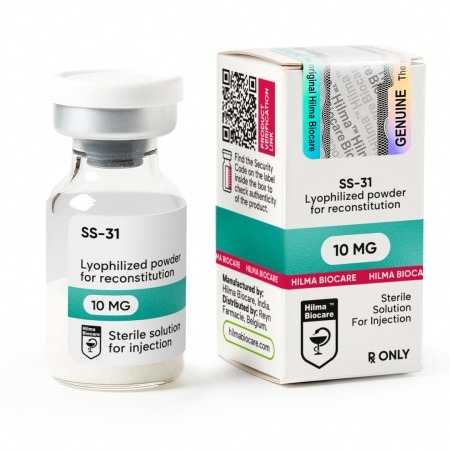
SS-31: 7 Important Facts About Elamipretide, Research, and Safety
Introduction
SS-31, also known as Elamipretide, is a synthetic peptide studied for its potential effects on mitochondrial function and cellular energy production. Mitochondria are structures inside cells that help generate the energy needed for essential biological processes. Researchers are investigating whether targeting mitochondrial membranes may help protect cells from certain forms of stress and dysfunction.
Interest in SS-31 has grown because mitochondrial health is relevant to several areas of medical research, including rare mitochondrial disorders, muscle function, and age-related cellular changes. However, promising laboratory findings do not automatically translate into proven benefits for healthy individuals or people with unrelated medical conditions.
This article explains what SS-31 is, how it is being studied, its potential applications, limitations, and important safety considerations.
1. What Is SS-31?
This is a synthetic, mitochondria-targeting tetrapeptide. It is also referred to as Elamipretide and has been investigated for its ability to interact with cardiolipin, a phospholipid found in the inner mitochondrial membrane.
This membrane plays an important role in mitochondrial structure and energy production. Researchers have studied whether Elamipretide can help preserve mitochondrial function under certain conditions.
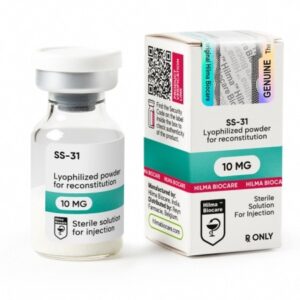
SS-31 is not a conventional nutritional supplement. Products marketed for research purposes may not have the same manufacturing standards, quality controls, or regulatory status as authorized medicines.
2. How Does SS-31 Work?
The proposed mechanism of SS-31 centers on mitochondrial membranes, particularly cardiolipin. Cardiolipin supports the organization and function of proteins involved in the mitochondrial energy-production process.
Preclinical research suggests that Elamipretide may influence mitochondrial efficiency and cellular responses to oxidative stress. These findings have led researchers to explore whether the peptide could have therapeutic applications in diseases associated with mitochondrial dysfunction.
However, its precise effects can vary according to the biological setting and condition being studied. Findings from cells or animals cannot establish that SS-31 will improve energy, physical performance, longevity, or general health in humans.
3. Potential Research Applications of SS-31
Researchers have investigated SS-31 in several areas:
- Mitochondrial disorders: Studying whether mitochondrial-targeted treatment may improve specific disease-related problems.
- Heart and cardiovascular research: Exploring mitochondrial function in cardiac cells and tissues.
- Skeletal muscle function: Investigating cellular energy processes and muscle-related symptoms.
- Oxidative stress: Examining how mitochondrial membrane interactions may affect cellular stress responses.
- Age-related changes: Exploring mitochondrial biology associated with aging, without establishing SS-31 as an anti-aging treatment.
These are research areas, not a list of proven benefits. Evidence for one condition should not be assumed to apply to another.
4. What Does the Clinical Evidence Say?
This has been studied in laboratory experiments, animal models, and human clinical trials. The strength of evidence differs depending on the disease, outcome measured, and study design.
Clinical research has explored Elamipretide in certain rare mitochondrial conditions and other disorders involving mitochondrial function. Results have not been uniformly positive across indications or endpoints, and further evidence may be needed to establish meaningful clinical benefits for particular uses.
An important distinction is that a biological effect, such as a change in a laboratory marker, is not necessarily equivalent to an improvement in symptoms, daily functioning, or long-term health.
Anyone evaluating SS-31 should review evidence from well-designed human studies and current regulatory information rather than relying solely on testimonials, animal research, or promotional claims.
5. SS-31 Side Effects and Safety Considerations
The safety profile of Elamipretide depends on the formulation, route of administration, treatment context, and individual patient. Clinical studies and prescribing information, where applicable, are important sources for understanding known risks.
Potential concerns may include:
- Injection-site reactions for injectable formulations.
- Skin irritation, redness, pain, or swelling at the injection site.
- Other adverse effects that may vary by study and treatment setting.
- Uncertain risks associated with prolonged exposure or uses that have not been adequately studied.
Products sold online as it may have uncertain purity, concentration, sterility, or storage history. An unverified product may pose risks beyond those identified in controlled clinical trials.
Do not assume that a peptide is safe simply because it occurs in a research setting or is described as well tolerated in a small study. A qualified healthcare professional can help assess risks in the context of a person’s medical history and other medications.
6. Is SS-31 Approved for Medical Use?
Regulatory status depends on the country, product, indication, and date. Approval for a particular medical condition does not automatically authorize other uses.
In the United States, the FDA approved Forzinity (elamipretide) in 2025 for a specific use in adults and pediatric patients with Barth syndrome weighing at least 30 kg. This approval is not a general authorization to use SS-31 for athletic performance, anti-aging, weight management, or other conditions.
People should check their own country’s medicines regulator for current authorization and availability. Products advertised online for research use should not be treated as interchangeable with an approved prescription medicine.
7. Who Should Consider SS-31?
This should not be considered a general wellness peptide or a proven treatment for ordinary fatigue, aging, or exercise recovery. Its appropriate use depends on the specific medical indication, applicable regulatory authorization, and guidance from a qualified clinician.
People with a diagnosed mitochondrial disorder should discuss established treatment options and relevant clinical evidence with their specialist. People considering an investigational treatment should ask about clinical-trial eligibility, potential risks, expected benefits, and available alternatives.
Self-experimentation with unverified injectable products can introduce avoidable risks. Medical supervision is particularly important when a treatment is being considered for a rare or complex disease.
Frequently Asked Questions About SS-31
What does SS-31 stand for?
This is a research designation for a synthetic tetrapeptide also known as Elamipretide.
Is SS-31 the same as Elamipretide?
Yes. SS-31 and Elamipretide refer to the same active peptide, although product formulations and regulatory status may differ.
Does SS-31 increase energy?
It has been studied for its effects on mitochondrial function. It has not been established as a general energy booster for healthy people.
Is SS-31 an anti-aging peptide?
No established evidence demonstrates that SS-31 slows human aging or extends lifespan. Research into mitochondrial biology does not prove an anti-aging benefit.
Can SS-31 have side effects?
Yes. Adverse effects can occur, and the risks depend on the product and treatment context. Injectable products from unverified sources also carry quality and contamination concerns.
Can SS-31 be used without medical supervision?
Unsupervised use is not advisable. A healthcare professional can explain the evidence, regulatory status, known risks, and appropriate alternatives for a particular condition.
Conclusion
This, or Elamipretide, is a mitochondria-targeting peptide that has attracted scientific interest because of its interaction with cardiolipin and its potential effects on cellular energy processes. Research has explored its role in several mitochondrial and other medical conditions, but evidence must be evaluated separately for each proposed use.
It is not a proven universal solution for energy, exercise recovery, or aging. Anyone considering SS-31 should consult a qualified healthcare professional and verify the current regulatory status of the specific product and indication.
Medical disclaimer: This article is for educational and SEO purposes only. It is not medical advice, a prescription, or a substitute for professional diagnosis and treatment. Always consult a qualified healthcare professional regarding medical decisions.